I shared last time how biblical End Times is about chronology – what will happen in our future, and quite possibly our near future. Yet eschatology is also about teleology – about God’s purposes in our world and our cosmos. And this is why it is an exciting and important area of Christian study. Great films take great directors. It is often only the private interviews that reveal the purpose and creative intention behind the epic movie we have just watched – the mind that crafted the plot and brought all the strands and scenes to a satisfying ending.
The Christian worldview is opposite to the prevailing cultural narrative. Rather than humanity hopelessly drifting in a chaotic and ever expanding universe, God has a purposeful future to write into our world. It is not novel, rather it has been part of the church’s credal declarations about Jesus Christ for centuries – he will come again in glory to judge the living and the dead, and his kingdom shall have no end.
What excites us about God’s loving purposes for our future that are revealed in scripture? (Because, yes they are most loving). Regarding the church, God is determined to have a bride that is prepared for his Son, as it says in the climactic end of Revelation. God’s work in and through the global church is the most creative force in the world, as he gathers more and more people who love him and live for his kingdom. As the apostle Paul says, there is soon going to be a great revealing of the children of God before the whole cosmos.
Regarding the wider created order, God is planning a wonderful liberation for our fallen world. The frustration, the tendency to decay, the wilful forces of evil, will all one day be powerful dealt with, and renewal will come to the cosmos like the glory of a morning sun melting the night’s frost. Eye has not seen, nor ear heard, nor mind conceived what God has prepared for those who love him.
Regarding his own saving purposes, God will bring his Son back as rightful king to rule over a perfect kingdom on earth. Jesus is gloriously depicted in scriptural prophecy as bridegroom, king and judge. When he returns all wrongs will be righted, loving justice will be dispensed, and the one who overcame sin and death will be the only one worthy to reign over and renew planet earth.
There is a divine end game plan at work behind the scenes of what we are living through. The Lord has a masterful plan in place. Our world’s future is not chaotic but held in the purposeful and gracious hands of God – Father, Son, and Holy Spirit – who alone can bring in the wonders of the age to come.
Christian eschatology – the understanding of the biblical End Times – has three dimensions as it pertains to our faith. It is about chronology, teleology and fidelity. Chronology in the sense that certain things will happen before Jesus’ return. Teleology in that God is drawing together his kingdom purposes in the world and the cosmos. Fidelity in that God will fulfil all that he promises in the bible to his people.
In my book Radiant and Resolute, I start with a look at the events in scripture that point towards the end of this age – this is chronology, a timeline. Biblical prophecies seem to agree that we will see an increase of the work of the Spirit through the His people and an intensification of world crises. You could call these twin dynamics ‘glory and shaking’. What many Christians don’t seem to realise is just how far along the End Time timeline we are right now. In terms of fulfilment of conditions for Jesus to return, we are getting very close.
Two dynamic conditions are these: one that the Jews are back in the promised land. In the political chaos to do with Israel and surrounding nations, plus hatred between Zionists and anti-Zionists, the simple fact is that End Time prophecies in Zechariah, Jeremiah and Ezekiel speak of a Jewish people being back in their homeland before the Lord returns. The second is that the gospel has nearly reached all tribes and nations of the world. The fulfilment of the great commission is within sight, and Jesus said in the gospels that the end would come when the gospel had been preached in all the world. We have never before been in a place where every person can encounter the gospel, in a global push of evangelism, bible translation and church planting. Maybe the spiritual conditions for Romans 11v25-26 are ready to be fulfilled – that the fullness of the Gentiles will come in and then all Israel shall saved.
Three troubling conditions also highlight how close we could be to the end of the age. Jesus spoke in Matthew 24 and Luke 21 about an increase of birth pains, where localised wars and troubles turn to more widespread global shaking – times of conflicts, earthquakes, famines and a shaking of the natural world. We know that we are closer to these times because we have never before faced existential threats to the human race and our planet. The nuclear threat looms large over fears of a third world war. With climate change, we have never before faced environmental devastation to the whole planet. And now the AI genie is out of the bottle, with governments worried about hostile threats to humankind from a runaway intelligence explosion.
I want to encourage you to read End Times prophecies in scripture with fresh eyes, not to make you fearful, but to make you watchful. Certain things have happened in the world in the last few decades that position us closer than ever to Jesus’ return. This is both a thrilling and sobering thought. If the End Times is about chronology, how far along the timeline do you think we really are?
I have now written two books about the biblical End Times – one a general introduction to the subject, and more recently a book about the church in the End Times: Radiant and Resolute. It has been encouraging to have many great reactions to what I have written, as though people want to understand what is going on in the world and what is coming down the line, from a biblical perspective. Yet I have also had some muted or negative reactions. Some people consider the End Times a controversial topic with many view points, that they would rather avoid. A few others, especially some church leaders, have treated me with a reserved respect – as though they assume I will be a little extreme in my theology. Both of these attitudes I think come from a lack of confidence in handling biblical future prophecy. Leaders in the UK generally don’t know how to teach these things from the pulpit, other Christians feel it to be a minefield they would rather skirt around.
Eschatology, or in other worlds the theology of the End Times, is arguably the most relevant topic to consider when our world is in its current crisis. As I say at the start of my book, the End Times is not a pet doctrine for the niche few, but is fast becoming an unavoidable context of living for the human race. It is not about whether you are ‘into’ such things, but how you navigate life as Jesus’ return gets closer.
Has the church not always been in the End Times? Yes in the sense that the early church was the start of the Old Testament prophecy about the pouring out of the Spirit in the last days. Jesus inaugurated a kingdom that was partially here and approaching its final fulfilment; we have been living in the last days for 2000 years. Yet there is a portion of biblical prophecy which focuses on a limited future time frame – what you could say is the end of the End Times. That time in future history involves an intensification of global shaking, trouble, revival and hopes for Jesus’ return. In my book I argue that this time is almost upon us. There are many current bible teachers much better than I who are suggesting the same thing.
So why should you read a book on the End Times? Because you might find that it opens up scripture to you, and that biblical prophecy becomes a road map for the times and years ahead. I will say more in future posts. Thanks for reading, God bless you, William
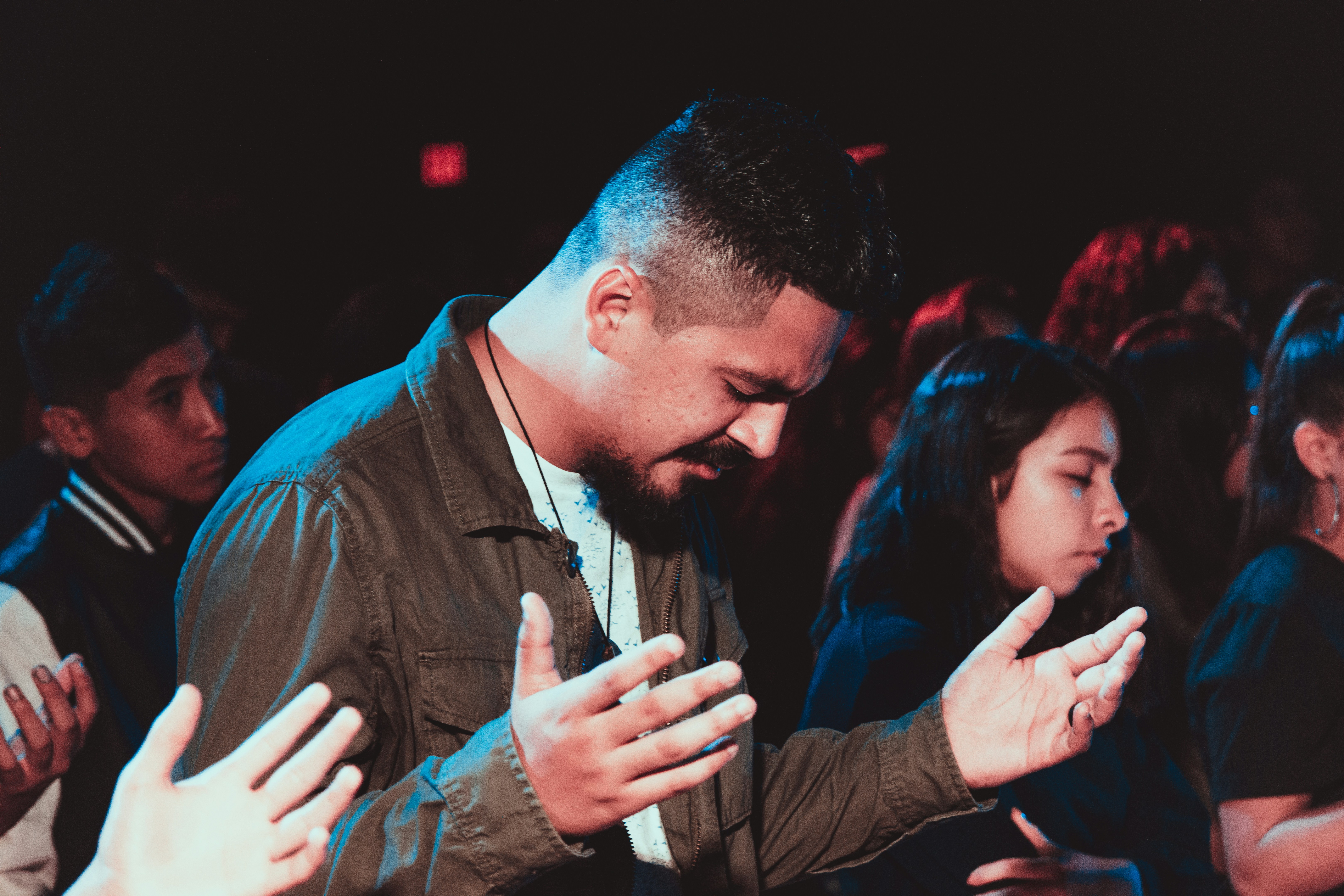
There are many kinds of prayer and many reasons to pray. The privilege of our relationship with God through Jesus gives us access to a great realm of prayer and worship – from the tears of confession to the ecstatic songs of praise, and from the quietness of listening to the fervency of intercession.
Amidst this rich variety there is the kind of prayer that births something. Or in other words God stirs people to a degree of prayer that partners with heaven to cause new things to come to birth. We may think in the bible of Hannah crying to God literally for a child, or of Elijah kneeling on Mount Carmel praying in the rain, or of the disciples in the upper room before Pentecost, gripped by a promise of the coming of the Spirit.
People are led by God into this kind of prayer for a reason and for a season. The reason is that God is about to do something new; the season is the time just before the new emerges. In evangelical piety, this has been called travailing prayer, I prefer to call it birthing prayer. It is not just about the groans, it is more about what it is producing or preparing for.
We have heard of Christian brothers and sisters having a burden in prayer: something about which they feel strongly or intensely enough to pray in a dedicated way. Travailing or birthing prayer is not really about our burdens but about sharing the burden of the Holy Spirit. The preacher C H Spurgeon is quoted as saying: “Whenever God determines to do a great work, He first sets his people to pray.” This is particularly true of times of revival and spiritual awakening. These are seasons of heightened spiritual activity, where the church is reformed and renewed, where heaven comes close to earth, where people are confronted by their spiritual state, and where many come to a living faith in Jesus.
We are not normally ready for such times, and so God draws his people into a place of hungering, thirsting, yearning and great openness to the Spirit, to prepare us for what he is about to do. If you search through Christian history books you commonly find a few people or even many people entering into the labour pains of prayer for revival, just before it is about to irrupt in a place or amongst a community.
I have been impressed recently about the story of the early Pentecostal revival in Azusa Street, Los Angeles in 1906. One of the leaders, Frank Bartleman kept a memoir of those heady days. He remarked how a spirit of prayer came upon groups of Christians in the fifteen months before the outbreak of the Spirit. He called it soul travail; there were times when he would groan and roll under the burden of prayer. To quote him: “prayer was not formal in those days. It was God breathed. It came upon us, and overwhelmed us. We didn’t not work it up. We were gripped with real soul travail by the Spirit that could no more be shaken off than could the birth-pangs of a woman in travail, without doing absolute violence to the Spirit of God.” (Frank Bartleman. The Azusa Street Revival: Eyewitness account. Revival School, 2008, p32).
You could confirm this by other stories, from the deep intercession of the early Moravians on the land of Count Zinzendorf in Germany in 1727, or the great spontaneous prayer gatherings in New York in 1857, or the tide of deep confession and united prayer of the young Korean church in 1907.
What then is birthing prayer like and how can you know if you are caught up in such a spirit of prayer? Let me say what is is not. It is not forced, and you cannot manufacture it. It is not about noise even though you may be deeply moved. It is not a badge of superiority, although not many are called into this.
In contrast here are some marks of birthing and travailing prayer: you know something is about to happen; you are stirred with expectancy in prayer. You have a greater level of faith, in that you are gripped by a promise God has made for a fresh work of the Spirit. It could be a bible passage brought to vivid life or a prophetic word that is alive. You are empowered in your natural weakness in prayer by the Spirit; you find yourself caught up in a wave of intercession or season of calling upon God in a way that is unusual. You find others in a place of powerful agreement, where intercessors and leaders realise you can combine your faith and desire for God. You persevere until completion; you pray until the breakthrough comes, or until the Spirit assures you that the answer is on its way.
I would say that birthing and travailing prayer is happening all over Europe right now. Amongst student groups stirred by the recent Asbury awakening; amongst seasoned intercessors, catching a new wave of faith for revival as the church stirs itself to fresh mission; amongst houses of prayer, finding a new sensitivity to the presence of the Spirit in worship and new zeal to prepare the way of the Lord in prayer walking their cities. It is dispersed and unorganised, but it is building. The greater the spiritual awakening on the horizon, the greater the spirit of prayer that will rise amongst God’s people. I feel that spirit of prayer and that burden for revival as I visit cities in Europe and walk with the cross.
And in awakening times, there is a genuine birthing – of a heaven sent move of the Spirit, of souls saved, of fresh leaders being forged, of a renewed church rising up, of a new day of kingdom opportunity.
May Jesus lead us into receiving the prayer burdens of the Spirit for our world, into a deeper spirit of prayer, and into the kind of prayer that births an awakening across our continent.
I have had the unusual privilege of prayer walking with a large cross at different times the last few years. It has never on my mind or on my radar to do this, but I have felt led by the Lord to walk at particular and important moments. I walked from the Midlands to London to pray for an end to the Brexit turmoil in the UK. I walked in every city of England near the end of the pandemic to pray for grace, blessing and glory.
Now, as I am planning to prayer walk with the cross in all capital cities of Europe, I have felt the burden to pray for revival and spiritual awakening across the continent.
I have felt many things in the public walking with a cross: I have felt very moved, sometimes close to God, often very unworthy, certainly quite exposed, and many times have been aware that I must appear rather an odd figure. And I have been asking God yet again ‘why the cross this time Lord? What is the significance of prayer walking with the cross in our continent?’
I sense this prayer mission is about a cluster of things from a heavenly perspective:
– It is heralding salvation time. Walking with the cross signifies the shed blood of Jesus for the people of Europe. Revelation 5 reminds us that Jesus is the Lion and the Lamb, the one who purchased people from every tribe. God is coming to Europe with great grace, when we least deserve it.
– It is putting the cross at the heart of the cities. These prayer walks are signifying something about the simple message of the cross as the answer to the needs of all people. 1 Corinthians 2v2 testifies that the church offers the gospel of Christ crucified to our world. The message of the gospel must become central again for Europe.
– It is coming in the opposite spirit to the powers that be. The cross has historically in Europe lifted up to highlight empire, control and Christendom. Yet it is precisely the weakness of the cross which triumphs over principalities and powers in Colossians 2v14. Jesus shows the power of love and sacrifice in dealing with the deeply entrenched areas of sin and evil.
– It is calling the church to live as crucified and raised with Christ. As many believers pay a high price for their faith around the world, this could be a season for the church in Europe to freshly identify with the cost of discipleship and to live in the power of the Spirit. In Luke 9v24 Jesus calls us back to the radical nature of losing our lives to find them, and to a quality of discipleship that challenges the world.
– It is marking the cities for revival in the heavenly places. Walking with the cross is a prophetic act, a powerful sign to the principalities and powers. Just as a priest or bishop might sign someone with the sign of the cross as a symbol of grace and blessing, we will sign the centre of each city with the sign of the cross as we walk. Joshua was promised every place where he placed his feet in Joshua 1v3. We are marking the capitals of Europe for revival and awakening, a sign that God is about to move in power and grace in all these countries.
I am not necessarily going to share all these things as I walk and pray with the cross, nor have them emblazoned on my jacket! However they will help form the praying and spiritual motivation of myself and friends who walk with me.
The symbol of the cross is beautiful and deeply profound. Please pray with me that walking and praying in this way will achieve all that God wants it to achieve, and in his timing. All I can do is walk and let God use it as he wills. May the cross in Europe herald salvation time, may the gospel become central to our continent, may love win over evil, may the church live cross shaped lives, and may the capital cities be marked for revival.
I believe a great spiritual awakening is about to come to the continent of Europe. The precursor signs are all around: thousands of young evangelists being trained for the streets of cities. Multiple large stadium worship and witness events bringing a dynamic presentation of the gospel to thousands. Groups of students in universities on their knees travailing for revival. Amongst the wasteland of dying churches, myriad fresh church plants and disciple-making initiatives springing up. Healing and miracle Holy Spirit services stirring faith and meeting the needs of hungry and needy people. A hardness of spiritual atmosphere shifting to a profound openness and questioning of life. Mercy ministries reaching out to refugees, who are greatly welcomed by those showing the hands and feet of Jesus. The soil of hearts in war torn countries receptive to the hope of the cross, and believers from nations in hatred to their neighbour finding keys of forgiveness to unlock the present from the past.
There is something going on in Europe that is unlikely yet not wholly unexpected. The church is starting to arise and find her courage. Of course there are areas of division, decay, compromise and still much to repent from. Yet the body of Christ in many places is stirring to new life. And this in the middle of populations supposed to be post-or even anti-Christian, yet who are in reality weary and disillusioned of philosophies and worldviews wholly devoid of answers to the ultimate meaning of life. There are great cracks appearing in our secular age, wide open to the grace of God.
Revivals have been part of our church’s great story over the years. Sometimes short lived and sporadic, they have been examples of the more dramatic episodes of the in-breaking of the kingdom of God through history. The spiritual trajectories of communities have been wholly altered through them, church streams born, revolutions avoided, the Christianising of nations sparked through them. Revivals – the mysterious and cathartic moving of the Spirit of God amongst groups of people.
Yet there have been even deeper and more history shaping times called Great Awakenings. This is when the reviving work of the Spirit has been more widespread and longer term, bridging continents, spawning spiritual movements, stirring a new missionary force, and sometimes creating spontaneous combustion in various hitherto unrelated places. The Great Awakening of the 18th century – with Wesley, Whitefield and Edwards, spanning the Americas and mainland Europe, for over sixty years – was one. The worldwide Pentecostal move of the early 20th century – with Seymour, Semple McPherson, Jeffries and Wigglesworth some early pioneering figures, sparked in the USA from Wales, and quickly touching South America, Africa, Europe and South Asia, with a growing spread over 80 years – was another.
What made these awakenings great? Partly the scale, of sheer numbers of people converted and churches touched. Partly the depth, with the new birth and warmed heart of the early Evangelicals; and the baptism of the Spirit to empower evangelism in the early Pentecostals. Partly the reach, both becoming something trans local and supra-cultural. Partly the energy, more like a wildfire than a tended bonfire. In each the context was a bigger cultural moment, in the 18th century the Industrial Revolution, and in the 20th the emergence of globalization of trade and finance.
I believe they are also termed great because of what came after. The 18th century awakening fuelled the great Evangelical missionary force, taking the gospel to all corners of the world. The 20th century awakening unleashed waves of spiritual renewal amidst and around two world wars and the Cold War.
A coming Great Awakening may well have an even larger scale, depth, reach, energy and effect than its precursors. Church decline has largely bottomed out and Christians have been discovering a fresh confidence in the gospel, lighting a torch again of hope in an hopeless world. Stratas of society all across Europe, regardless of age, are spiritually tinder dry and potentially very combustible for good or ill. Regional conflicts and a shifting of global alliances out of pandemic times, amidst crumbling social values and an always on digital news age, is creating widespread anxiety termed the age of panic. The energy waves from the vibrancy of the Majority World church, and the surprising upsurgence of gospel movements amongst hitherto resistant Muslim and Asian countries, are starting to lap onto the shores of Europe, even as people migration increases.
God is up to something and we have to wake up to it, even as Jesus’ return draws closer. We are on the cusp of something fresh of God. We don’t know exactly which way it will go. It could be dramatic, it could rock the institutioal church to her foundations and cause a great metanoia turning around. Yet, knowing the power of previous awakenings, sometime soon – the breath of the Spirit will come like a might force, God’s people will find inner renewal, atmospheres will shift, multitudes will be presented with the love of Jesus, gospel movements will start to go viral, and the Christian faith will be re-engaged with as public truth. I wonder at what point will we stand to our feet and realise we are in the midst of another, maybe the last Great Awakening?
I haven’t written on this blog all this year; there has been much going on in life, but nothing clear enough to write. What I share here is an unusual prayer vision that happened a couple of days ago that I feel is relevant for the church.
We had been hosting a gathering of Christian prayer leaders from around the country, in our house of prayer, for a couple of days. It was during a time of extended sung worship one evening that I felt the Holy Spirit download a vivid and moving image into my mind.
I saw Jesus, but this was no Jesus meek and mild; he looked like Hercules, with a bare top, rippling muscles and a big beard. He was pulling something, straining to pull something behind him. It looked like a rope, then I suddenly realised it was his robe, his royal robe. It was off his shoulders and Jesus was pulling the collar of his robe. Along the train of his robe were people – tiny people, people following Jesus – standing and sitting on this robe as he pulled. It seemed to be an image that represented the church as they were following the Lord. I think these represent people who loved God and were sincere in discipleship.
As I watched this vision, Jesus seemed to be pulling his robe through a gap in a wall or hedge. This gap became very small and narrow, and as Jesus continued pulling, people on this robe started falling off, tumbling off and scattering onto the grass and path. Many people fell off due to the sudden squeeze of this tight gap. Those who stayed on were either those who had wrapped themselves around in this robe or who had held on with their fingers for dear life. No one avoided this restricted gap; all either fell off or felt an intense squeeze as they were pulled through. The other side of this wall or hedge was a place of peace, calm, and the beauty of enjoying Jesus’ presence as he stopped pulling and stood amongst his people.
This was such a bizarre prayer vision that I sat in the middle of the worship time and pondered what it could mean. The single impression I had was that the wall hedge signified offence – being offended at God. The temptation to be offended at the Lord for various reasons seemed the reason people fell off his robe.
I think this vision speaks into tests of our faith, in particular how we stay in a place of trusting God. As I continued musing on this theme, I have thought about why we might become offended at God. From scripture there are many reasons. We can be offended by delay, when God doesn’t answer our prayers in the timing we like. Jesus said ‘when the Son of Man comes, will he find faith on the earth?’ (Luke 18v8). We can be offended by his word, when following his commands goes against the grain of our preferences. The prophet Isaiah’s contemporaries wanted pleasing prophetic words; they told him to: ‘stop confronting us with the Holy One of Israel!’ (Isaiah 30v11). We can be offended by disappointment, where our lives or spiritual journeys haven’t turned out the way we would have liked. God spoke to his people saying ‘Why do you complain, Jacob? Why do you say, Israel,“My way is hidden from the Lord; my cause is disregarded by my God”? (Isaiah 40v27).
We can be offended by God’s judgments, if we become scandalised by who he raises up and casts down, in local contexts and global issues. The prophet Habakkuk was appalled at how God was using wicked nations to come against Israel: ‘Why then do you tolerate the treacherous? Why are you silent while the wicked swallow up those more righteous than themselves?’ (Habakkuk 1v13). We can be offended by the challenge of the gospel, for the cross is an uncompromising message, which chafes against our soul-ish tendencies. In John’s gospel, Jesus was teaching about deep spiritual truths, and it caused a stir: ‘Aware that his disciples were grumbling about this, Jesus said to them, “Does this offend you? Then what if you see the Son of Man ascend to where he was before!’ (John 6v61-62).
We can be offended by suffering, and feel hard done by in God’s ways of working his purposes in our lives. Job was worn out by his suffering and loudly voiced his complaints to God: “I loathe my very life; therefore I will give free rein to my complaint and speak out in the bitterness of my soul. I say to God: Do not declare me guilty, but tell me what charges you have against me.’ (Job 10v1-2). We can be offended by the way God moves by the Holy Spirit; if the revival we long for looks very different from what we had hoped. John the Baptist, the forthright forerunner of Jesus had later doubts about the Messiah: ‘he sent his disciplesto ask him, “Are you the one who is to come, or should we expect someone else?” (John 11v2-3). You may think of other reasons for becoming offended at the Lord.
The takeaway from this vision for me were three things.
Firstly, in the coming years of life and discipleship, all of God’s people will be tested in some way by the wall of offence. Becoming offended by God doesn’t necessarily mean we lose faith, just that we tumble in a way that brings damage or disruption to our closeness and journey of following him. Even those who navigate this test will be squeezed and feel the pressure of this temptation.
Secondly, the only was of surviving and passing this test from this vision was to be enfolded by or be holding onto Jesus’ robe. This speaks to me of either a stance of our worship and trust, or of our persistent pursuit of Jesus and being close to him. Becoming wrapped in his cloak through intimate, trusting, worshipful lifestyle will help us through the coming years of being tested. Also becoming tenacious in holding on to our faith in God’s goodness despite all contrary evidence, through focused discipleship and obeying his word, will help us survive the squeeze of misunderstanding the Lord, his heart and intentions.
Thirdly, Jesus was trying to pull us through this wall of offence. His deep desire seemed to be to bring as many through a testing time as possible, although he wouldn’t stop pulling despite the squeeze. It is as though the Lord was willing us to pass this testing time, but would use it to prune and refine his church.
It reminded me of two profound bible verses from Isaiah the prophet. In Isaiah 59v17 it says of God that ”he wrapped himself in zeal as in a cloak’. In Isaiah 63v1 it describes the Lord as ‘robed in splendor, striding forward in the greatness of his strength’. These are both references to God exercising his work of salvation, judgment and cosmic redemptive purposes in the earth. I think this vision speaks of a future more intense time, possibly the increasing of global shaking and testing for the body of Christ, alongside seeing signs of his glory through revival and spiritual harvest. These will be days when our trust in God and depth of our faith will be tested.
I felt Jesus say at the end of this vision to me and to the church: do you really know and love me? Will you follow me wherever I go? Please ponder and pray over this vision and what it might say to your own life of faith and collectively to the church’s journey of discipleship in coming days.
I was journalling in the house of prayer on Friday.
I had just been reading a prayer pamphlet for the day. They mention that this is the time when Christians looking forward to the great hope of the second coming of Jesus – the Parousia. Yet their subsequent prayer points had nothing to do with that, but focused on the immediate, the living, blessing and serving towards Christmas.
The prayer points were great. Yet it is as though the writer didn’t know how to connect the two. We mention Jesus’ return at the start of Advent because it is part of the church’s calendar, but we don’t know how to relate it to our Christian lives. It struck me again about the great disconnect between this eschatological statement of faith and how on earth we find it relevant to our life and mission as Christians.
What does the proclamation and longing for Jesus’ return have to do with our witness here in 2022?
It can’t be just that, if life is difficult and dark, that in some distant, ephemeral way, God will sort things out and there will be a bright dawn at some vague future point.
The second coming of Jesus is surely meant to have teeth for my life as a Christian, must surely be a sure anchor point of our faith. It should mean something in a joined up internal conversation for the average believer. I am certain that is God’s intent. I believe and therefore I act, I am changed, fortified, strengthened, more convinced in my faith and witness, precisely because I know that Jesus will return.
Whether near or far (and I think it is near), our belief in the Parousia speaks of a certain and hopeful future. It declares the certainty of God’s coming kingdom, of his purposeful plans, of us being in the arc of the salvation story, that has an end point. It adds fuel to our prayers, gives a spring in our step, even joy in our work and service. I do not live in isolation, or in a meaningless universe, but in a great story of divine saving love, that is going somewhere, and that I am caught up in.
We say in churches this great statement: ‘Christ has died, Christ is risen, Christ will come again.’
The start of Advent causes us to stop and think about this coming. Belief in Jesus’ return is not some theological iceberg or floe that has somehow broken off and become separated from the continent of faith, but is part of the great land mass of the Christian story, a story of promise and fulfilment. Jesus’ first and second coming are intrinsically and vitally linked, and this faith causes a healthy tension in our daily life, and a pull in our spirit towards a glorious kingdom that is fast approaching. The church lives from this certain hope and works towards this great and glorious day, when Jesus comes as our victorious king to save and liberate the world from its bondage to sin and evil.
As the apostle Peter encourages us, let us ‘look forward to the day of God and speed it’s coming.’ (2 Peter 3v12 NIV). Amen, come Lord Jesus!
I am very grateful to my publishers Authentic Media for offering me the opportunity to write a short devotional series for the YouVersion bible app.
The YouVersion bible app is being used by many Christians as a help and inspiration, a place for great spiritual resources, especially suitable for Christians on the go in our mobile culture. It is a place to read, pray, share and connect with others reading the bible.
I have written a five day devotional entitled ‘living our lives in the light of Jesus’ Second Coming’. The themes are on being expectant, keeping watchful, living wisely, staying standing and being one who overcomes. The turbulent times of today are causing many people to wonder about spiritual things, and also to make thoughtful Christians dig deeper into their bibles. The question of how to live our lives ready for Jesus’ return must be one of the most critical personal issues to think through. Hopefully people will find these devotionals helpful and the bible verses really relevant for them in these days.
Maybe you would like to follow this short series through one week leading up to Easter or recommend to a friend to read. For each day there is a reading, a comment, a reflective thought and a prayer.
Check it out and let me know how it has helped you. The link to the devotional series is here:
We are all watching the scenes of the conflict in Ukraine with a mix of disbelief and dread. It is hard to tear our eyes away from the images of fleeing refugees and shelled cities. Lots of christians are posting prayers and comments about what might happen on social media. I have nothing to add of wisdom about what might happen in this conflict and whether it will escalate. In our house of prayer we are wrestling daily with how to pray into this unfolding tragedy. As many christians admit, we trust God but we don’t understand his ways very well. We pray for his kingdom to come; sometimes we praise him for clear signs of kingdom presence, and at other times we are more aware of the mystery of his purposes.
Instead I want to offer four brief reminders about what we know of our Trinitarian God when world affairs are very troubling.
Firstly, God is never the author of evil. He doesn’t want us to be mistaken about evil. Our world was created good by a very good Creator. Sin comes from the evil in people’s hearts. Satan is the tempter and the destroyer. Often subtle in his ways, he is always looking to stir up strife, and to empower dark desires. When systems and regimes are involved, that empowerment can be very great. God is always perfectly good in his very being. He never causes dark powers in the world, nor incites people to sin. That is the result of our fallen state and the fallen devil at work. We are children of a good, good Father, whose very goodness infuses the air of the world and underscores creation itself.
Secondly, God is very present in the midst of the mess. He doesn’t want us to feel alone. God is never absent from our world, even if we cannot see or sense where he is or what he is doing. The gospels underline that Jesus’ coming declares categorically that God is ‘Immanuel’ the One who is always with us. This means that he is in the caring for the fleeing refugees, in the strengthening of the resolve of those fighting for the good and the right, in the comforting of the grieving ones, in the outrage against injustice. He is right down in the middle of the mess and confusion, undergirding and profoundly holding a nation in pain and a world bewildered in the turmoil.
Thirdly, God will use even this in his wider purposes. He doesn’t want us to despair in dark times. God is never boxed in, and with God nothing is impossible. What God allows and what he causes are two very different things. He is remarkably able to bring good out of evil, and does so again and again. We of course do pray for miraculous intervention and that does happen; the kingdom does break in with power into our world. We can also pray for the power of love to overcome. That is sometimes a longer process. Yet, if the centre of our faith is our Lord dying on the cross, then we know that suffering love does overcome the worst of evil, and then rises from the ashes on the other side of death. Who knows what is being stirred by the Spirit right now – in faith in God, in the united front of leaders against oppression, in a generation realising what really matters of their freedom and their life meaning, in the countless acts of random kindness in wartime trouble?
God will also use human history and weave it into his salvation story, even his End Times story. We know from scripture that the closer we get to Jesus’ return, the more shaking increases and the more global trouble occurs. This turmoil on the edge of Europe could be leading us further towards tribulation. Yet there is nothing that can occur that is outside God’s ultimate control. He works in ways beyond our understanding; he is involved in both historic judgment of nations and systems that overstep their mark, and in saving and redeeming work amongst every tribe, language, people and nation.
Fourthly, God will not let our world destroy itself. He does not want us to fear the end of the world. The Hollywood fascination with Apocalypse and Armageddon is a skewed picture, it is not a biblical picture. Although the world teeters on the edge of oblivion and overwhelming evil in End Time tribulation, good is not obliterated nor the church downtrodden. In a coming darkest hour, God will step in to save the world from ourselves. Jesus will come on the clouds in great glory, to defeat evil and usher in his perfect kingdom; a King who is always interceding and working to bring light in darkness and to reconcile the world to God. The light of Christ and the love of God win, decisively, in the end.
So in the middle of an unfolding tragedy and conflict happening in front of us, let our confidence in God grow strong, and our ability to pray, serve, love and hope, in our spheres of influence, grow stronger too.